
 Português
 Español
AI in Production Planning and Control (PPC): Is your industry ready to make decisions before the problem occurs?
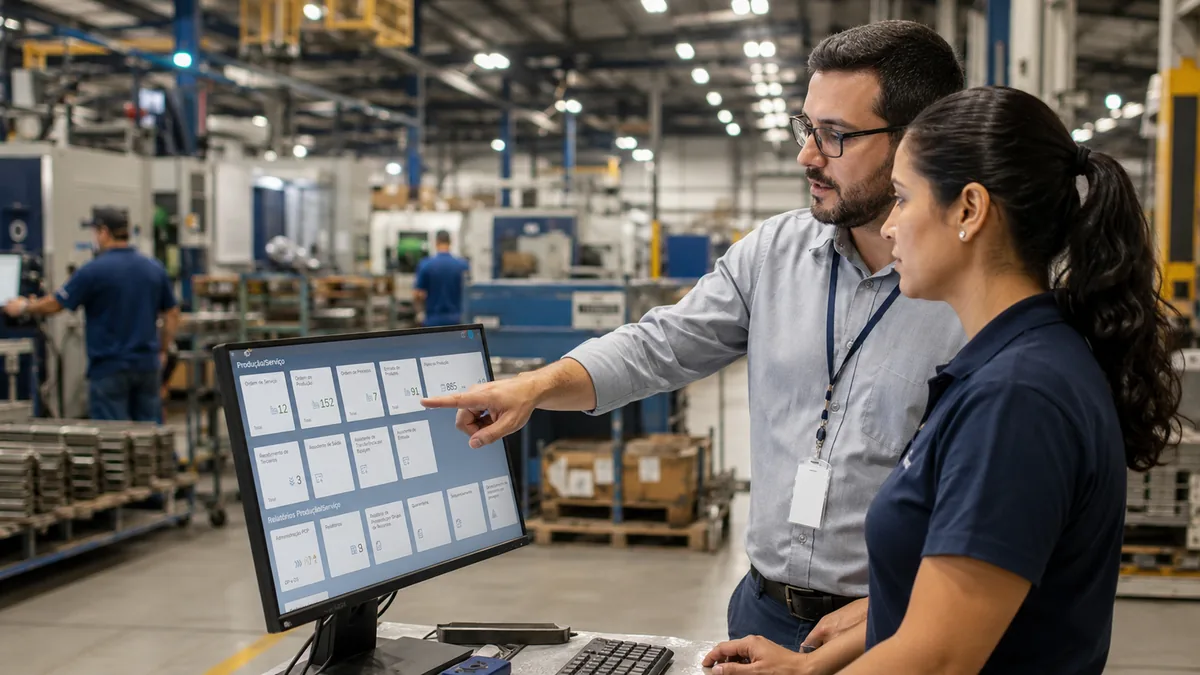
An urgent order is added to the schedule. A piece of equipment becomes unavailable. The raw materials don't arrive on time. In a few minutes, the plan that seemed perfect no longer reflects the reality of the factory.
The team is scrambling to reorganize priorities, update spreadsheets, check inventory, and calculate new deadlines. Meanwhile, the sales department awaits a response, production expects guidance, and management tries to understand the impact of the change.
Now imagine another scenario: before the delay becomes inevitable, the system identifies the risk, relates the constraints involved, and presents alternatives to support the manager's decision.
This is where artificial intelligence begins to gain ground in Production Planning and Control.
AI in PPC goes far beyond automation
When we talk about artificial intelligence in industry, it's common to imagine autonomous robots and machines operating without human intervention. However, some of the most relevant applications can happen far from robotic arms—in the planning phase.
PPC (Production Planning and Control) deals daily with variables that are constantly changing:
- machine capacity and resources;
- availability of materials;
- delivery times;
- preparation and production times;
- business priorities;
- scheduled maintenance;
- quality occurrences;
- Orders in progress.
Analyzing all this information manually requires time and expertise. When the data is scattered across systems, spreadsheets, and parallel controls, the task becomes even more complex.
Artificial intelligence can support the analysis of large volumes of data, recognize patterns, and indicate risks that are not always perceived in advance.
But there is a fundamental condition.
An AI cannot correct an operation without reliable data
The quality of any analysis depends on the quality of the information used.
If production times are outdated, physical inventory doesn't match the system, or data is only collected at the end of the shift, even the most advanced technology will operate with an incomplete view of the factory.
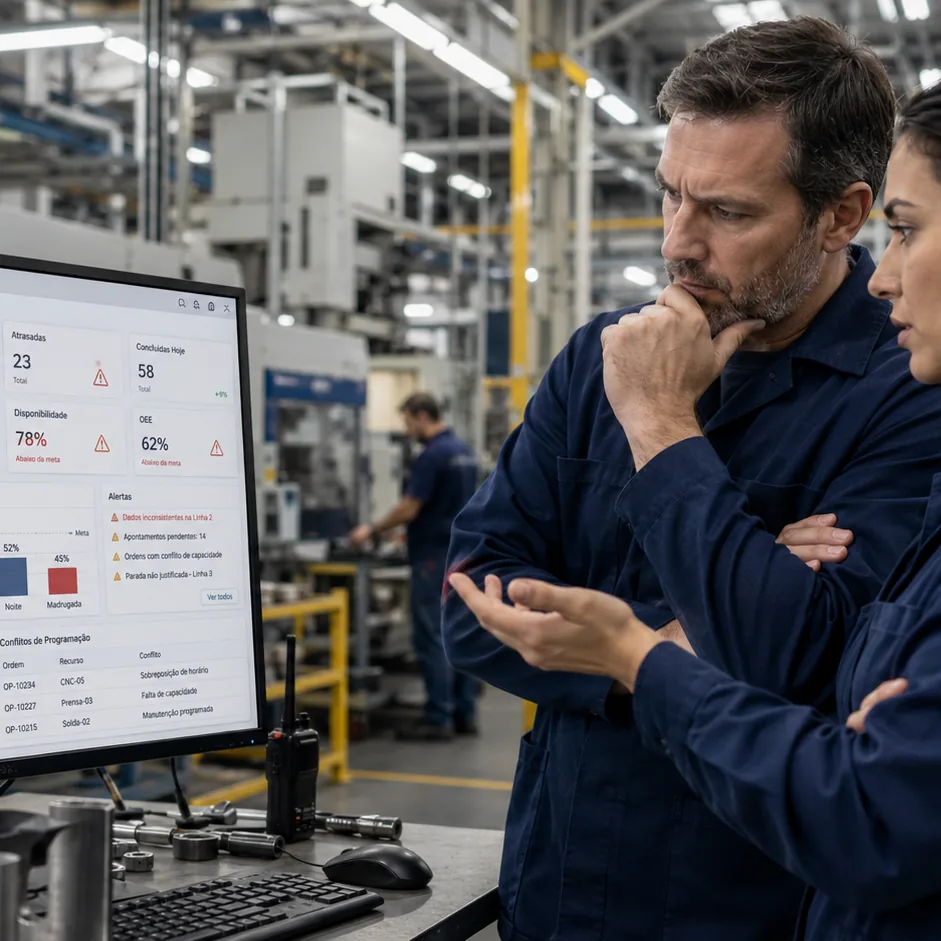
In other words:
Artificial intelligence doesn't transform bad data into good decisions. It simply processes that data faster.
Therefore, before adopting advanced applications, the industry needs to build a consistent operational foundation.
Production, inventory, planning, quality, maintenance, logistics, and costs must share up-to-date and connected information. Without this integration, each area interprets only a part of the problem.
What can artificial intelligence do for production planning?
When powered by structured data, AI can become an important tool to support PPC (Product Control Planning).
It can help identify orders at risk of delay, analyze the impacts caused by resource unavailability, and suggest rescheduling scenarios.
It can also correlate production histories, time variations, material consumption, and operational occurrences to reveal patterns that are difficult to perceive in manual analyses.
This allows the manager to respond more quickly to questions such as:
Which order should be prioritized now?
What will be the impact of a machine shutdown?
Is there enough material to complete the schedule?
Is the timeframe promised to the client still feasible?
Which alternative has the least impact on operations?
The proposal is not to take control away from the professionals.
It's about providing them with better conditions so they can make their own decisions.
Assisted decision-making, not autopilot management
The experience of those who know the factory remains indispensable.
There are variables that don't always appear in a registration or indicator: process specifics, temporary limitations, commercial conditions, and knowledge accumulated by the team over the years.
Artificial intelligence should complement this knowledge, not replace it.
In PPC, the most responsible path lies in assisted decision-making: the system organizes information, identifies risks, and presents possibilities; the manager evaluates the context and defines the course of action.
It's the union between technology and industrial expertise.
Old factory floor knowledge finds new tools to see further.
The first step is not to buy an AI
Before asking which artificial intelligence solution to adopt, the industry must assess whether it has reliable information to support its decision.
Some questions can help in this diagnosis:
- Does the plan utilize the actual capacity of the resources?
- Does production reporting reflect what is happening on the shop floor?
- Are inventory, quality, and maintenance connected to production planning and control (PPC)?
- Are the programming changes recorded and traceable?
- Does management rely on manual consolidations?
- Do all sectors work with the same version of the data?
When these answers still depend on spreadsheets, messages, and conferences between departments, the priority should be to structure industrial management.
Specialized solutions, integrated with ERP systems, help connect planning and execution, creating a more secure foundation for analysis, automation, and future artificial intelligence applications.
The future of PPC begins with visibility
Artificial intelligence is expanding the possibilities of manufacturing. But its value will not be measured by the number of algorithms used.
It will be measured by the quality of the decisions that the industry is able to make.
Prepared companies will not only be those that adopt new technologies first. They will be those that can transform operational data into clear answers, at the moment when it is still possible to act.
Because anticipating a problem costs less than halting production, renegotiating a delivery, or regaining a customer's trust.
Before bringing artificial intelligence into production planning and control (PPC), your industry needs to ensure that the data already accurately reflects the reality of the operation.
Talk to our experts and discover how to prepare your operation for faster, safer, and smarter decisions
OPEN Solutions helps industrial companies connect planning, production, and management through solutions developed for manufacturing needs.
I want to know the solutions. I want a free demo